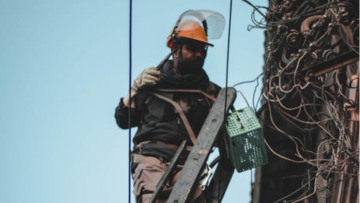

From Laborer to Rigger: A Specialized Career Path in Heavy Construction

At a Glance
- Rigging is one of the clearest paths from general labor into a specialized, higher-paying trade.
- The NCCCO Rigger certification has two levels: Level I for basic tasks and Level II for complex, unsupervised rigging.
- Candidates must be at least 18, pass a written exam, and pass a hands-on practical exam.
- OSHA’s Cranes and Derricks standard (29 CFR 1926 Subpart CC) requires that anyone rigging a load be “qualified,” which is why certification carries real weight on job sites.
- Certification is valid for five years and must be renewed through recertification.
- BuilderFax lets workers store rigger credentials digitally so contractors can verify them instantly, without lost cards or expired paperwork.

Every crane lift depends on one person getting the rigging right. If a sling is mismatched to a load, or a hitch is configured incorrectly, the outcome can be catastrophic. That responsibility is exactly why rigging has become one of the most in-demand specialties in heavy construction, and why laborers who move into it often see a fast jump in pay and job security.
Rigging is not an entry-level trade you fall into. It is a credentialed skill built on hands-on experience, technical knowledge of load dynamics, and a nationally recognized certification. For a laborer already working around cranes, hoists, and heavy materials, becoming a certified rigger is one of the most practical ways to move up without going back to school for years.
This article walks through what riggers actually do, how the certification path works, what it costs, and how a laborer can realistically make the transition.
What Does a Rigger Actually Do?
A rigger prepares loads to be lifted and moved safely by a crane or hoist. That includes selecting the right rigging hardware, inspecting slings and shackles, calculating load weight and center of gravity, and attaching the load using the correct hitch configuration.
Riggers work closely with crane operators and signalpersons. On many job sites, one person is certified in more than one of these roles, which increases their value to a contractor staffing a lift.
Core Rigging Responsibilities
- Inspecting rigging equipment before each use
- Calculating load weight, sling angles, and capacity limits
- Selecting the correct hitch and rigging hardware for the load
- Communicating with the crane operator during the lift
- Identifying hazards such as unstable ground conditions or overhead obstructions
The Two Levels of NCCCO Rigger Certification
The National Commission for the Certification of Crane Operators (NCCCO) is the industry-recognized body for rigger certification. It is accredited by the American National Standards Institute (ANSI) to the ISO/IEC 17024 standard, and federal OSHA recognizes NCCCO certification as meeting its qualification requirements for riggers.
There are two certification levels:
Rigger Level I covers basic, repetitive rigging tasks where the load weight, center of gravity, and rigging configuration are already known or provided to the rigger.
Rigger Level II covers more complex work, including situations where the rigger must calculate rigging capacity and select components and methods independently. Level I certification is generally treated as the foundation before moving to Level II.
Source: NCCCO Rigger Certification Program overview and candidate handbook.
Why OSHA Makes This Certification Matter

Since 2010, OSHA’s Cranes and Derricks in Construction standard has required that rigging on a construction site be performed by, or under the direct supervision of, a “qualified rigger.” The standard does not name NCCCO specifically, but it does require documented proof of competency. NCCCO certification is the most widely accepted way contractors satisfy that requirement, because it comes from an independent, ANSI-accredited exam rather than an employer’s own sign-off.
For a laborer, this means certification is not just a resume line. It is often the deciding factor in whether a superintendent assigns you to lift work at all.
Step-by-Step: Moving From Laborer to Certified Rigger
- Get exposure on the job. Ask to work alongside riggers and crane crews. Learn hitch types, hardware, and signal basics informally before you test.
- Choose a training provider. NCCCO does not offer training itself, but maintains a directory of training providers who prepare candidates for the written and practical exams.
- Study the exam outline. Written exams cover rigging equipment, hitch configurations, load calculations, and safety standards referenced in OSHA and ASME B30 documents.
- Register and pay fees. Typical costs include a core exam fee and an NCCCO registration fee, which vary by test provider.
- Pass the written exam. You have up to 12 months from application to complete both exams.
- Pass the practical exam. This is a hands-on demonstration of rigging tasks evaluated by a certified practical examiner.
- Maintain your certification. Certification is valid for five years. Recertification requires passing the practical exam again and complying with NCCCO’s substance abuse policy and code of ethics.
What It Costs
Costs vary by training provider and location, but candidates should generally expect to budget for a written exam fee, a practical exam fee, and an NCCCO registration fee, in addition to any training course tuition. Entry-level prep courses can run from a few hundred dollars for a short course to more for a full multi-day program that includes both rigger and signalperson preparation.
Career and Pay Impact
Certified riggers are frequently paid more than general laborers because the role carries direct safety accountability. Contractors bidding on projects with structural steel, precast concrete, or heavy mechanical equipment need certified riggers on the crew, and a shortage of them can delay a schedule. For a laborer, adding Rigger Level I, then Level II, and often Signalperson certification on top of it, builds a resume that stands out for lead and foreman roles.
Rigging is one of the most direct ways a laborer can move into specialized, better-paid construction work without years of formal schooling. It takes real study and hands-on practice, but the path is clear: build experience, get trained, pass the NCCCO exams, and keep your certification current. Once you’re certified, the challenge shifts from proving your knowledge to proving you can keep your credentials, training records, and renewal dates organized across every job and every employer.
Your Rigging Career, Always On Hand
Certifications only help you if you can prove them on demand, at the gate, during an audit, or when a new contractor asks for proof before staffing you on a lift.
BuilderFax stores your Rigger Level I, Level II, and Signalperson credentials in one place, with renewal reminders so your certification never lapses without warning. Contractors can verify your credentials instantly instead of waiting on paperwork.
Download BuilderFax
Useful Resources
- NCCCO Rigger Certification Overview: https://www.nccco.org/nccco/certifications/rigger
- NCCCO Training Provider Directory: https://www.nccco.org/training
- OSHA Cranes and Derricks in Construction Standard (29 CFR 1926 Subpart CC): https://www.osha.gov/laws-regs/regulations/standardnumber/1926/1926SubpartCC
- BuilderFax: https://www.builderfax.com
Frequently Asked Questions
Do I need Rigger Level I before Level II?

.svg)
Is NCCCO certification legally required?
How long does certification last?
Can a laborer with no crane experience become a rigger?
Your Rigging Career, Always On Hand
Certifications only help you if you can prove them on demand, at the gate, during an audit, or when a new contractor asks for proof before staffing you on a lift. BuilderFax stores your Rigger Level I, Level II, and Signalperson credentials in one place, with renewal reminders so your certification never lapses without warning. Contractors can verify your credentials instantly instead of waiting on paperwork.
Download BuilderFax.svg)
.svg)