

Fall Protection Training: Certification Standards for Working at Heights
At a Glance

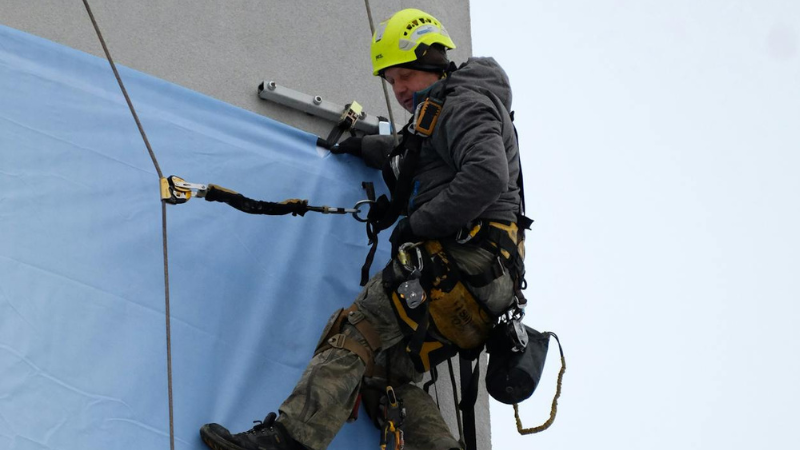
Why fall protection training matters: Falls are the leading cause of death in construction. OSHA requires specific training before you work at heights—and proper certification protects both your life and your job.
What you’ll learn:
- OSHA’s 6-foot rule and when fall protection is mandatory
- Four training levels: awareness, authorized user, competent person, and qualified person
- What each certification covers and who needs which level
- How to get certified and maintain your credentials
- Renewal requirements and retraining triggers
- Documentation requirements employers must follow
Key takeaways:
- Construction workers need fall protection training at 6 feet or higher (4 feet in general industry)
- Training must be conducted by a competent person and documented in writing
- Most certifications require renewal every 2 years
- Employers must retrain workers when equipment or procedures change
Introduction
Falls kill more construction workers than any other hazard. Year after year, falls rank in OSHA’s top violations—not because workers don’t care about safety, but because fall hazards are everywhere on construction sites and the requirements are complex. Roofing, framing, steel erection, scaffolding, ladder work, if you’re more than six feet off the ground, you’re in fall protection territory.
OSHA doesn’t just require fall protection equipment. The regulations mandate specific training before anyone works at heights.
This training isn’t optional or discretionary, it’s law. Without proper fall protection certification, you can’t legally work on most job sites, and employers face serious penalties for putting untrained workers at height.
This article breaks down exactly what fall protection training entails, who needs which level of certification, how to get certified, and what’s required to maintain your credentials.
Understanding OSHA’s Fall Protection Requirements

OSHA’s fall protection standards apply whenever construction workers face potential falls. The basic rule: any worker on a walking or working surface 6 feet or more above a lower level must be protected from falling. This is commonly called the “6-foot rule,” though technically OSHA regulations are more nuanced than a simple distance trigger.
The six foot threshold applies to most construction scenarios under 29 CFR 1926.501(b). However, certain situations have different requirements. Scaffolding doesn't require fall protection until workers reach ten feet. Steel erection follows Subpart R with different trigger heights: most steel erection workers need fall protection at 15 feet or more, while connectors (workers actively receiving and connecting steel members) must have fall protection equipment available at 15 feet but don't need to actually tie off until reaching two stories or 30 feet, whichever is less. California recently lowered its residential construction trigger height from 15 feet to six feet, effective July 1, 2025, aligning state requirements with federal standards.
General industry (non-construction) follows different rules. Workers in manufacturing, warehousing, and similar environments need fall protection at 4 feet under 29 CFR 1910.28.
Fall protection isn’t just about height. If you’re working over dangerous equipment or machinery, regardless of height, you will need protection. A three foot drop onto operating machinery or into a pit with sharp objects requires the same protection as a 20-foot fall to a concrete surface.
Understanding when fall protection applies is fundamental, but it’s only the starting point. OSHA requires workers to know not just when to use fall protection, but how to use it correctly, inspect it properly, and recognize when systems fail.
The Four Levels of Fall Protection Training
Fall protection training isn’t one-size-fits-all. OSHA defines “competent person” and “qualified person” formally in its regulations (29 CFR 1926.32), while “awareness” and “authorized user/authorized person” represent industry-standard training levels based on job responsibilities and the roles workers perform. Each level is designed for different duties and responsibilities:
Awareness Training provides a basic understanding of fall hazards for workers who might encounter elevated work areas but don’t actually work at heights themselves. This includes office staff visiting job sites, delivery personnel, or workers whose primary duties keep them at ground level. Awareness training covers hazard recognition and avoiding danger zones.
Authorized User (Authorized Person) Training is required for any worker who uses fall protection equipment. OSHA defines an authorized person as someone “approved or assigned by the employer to perform a specific type of duty or duties or to be at a specific location or locations at the jobsite.” This is the certification most construction tradespeople need.
Authorized users must understand how to inspect their equipment, properly don and adjust harnesses, connect to anchor points correctly, calculate fall distances, and recognize when equipment needs to be replaced. Training covers the specific types of fall protection systems the worker will use—personal fall arrest systems, positioning devices, guardrails, safety nets, or other protective measures.
Competent Person Training goes deeper. OSHA formally defines a competent person as “one who is capable of identifying existing and predictable hazards in the surroundings or working conditions which are unsanitary, hazardous, or dangerous to employees, and who has authorization to take prompt corrective measures to eliminate them.”
Competent persons supervise fall protection programs, conduct worksite evaluations, approve equipment for use, train authorized users, and perform annual equipment inspections. They must understand the regulations thoroughly, know how to select appropriate protection for different scenarios, and have the authority to stop work when hazards exist. Most competent person courses run 16 hours and require both written exams and practical demonstrations.
Qualified Person Training represents the highest technical level. OSHA defines a qualified person as “one who, by possession of a recognized degree, certificate, or professional standing, or who by extensive knowledge, training, and experience, has successfully demonstrated [their] ability to solve or resolve problems relating to the subject matter, the work, or the project.”
Qualified persons design fall protection systems, engineer anchorage points, calculate load requirements, and certify that installations meet standards. Think of qualified persons as the engineers of fall protection—they solve technical problems and design solutions that competent persons then implement and authorized users employ.
Most construction workers need at least authorized user training. Job site supervisors, safety managers, and foremen typically need a competent person certification. Qualified person training applies to safety engineers, project engineers, and others responsible for designing fall protection systems.
What Authorized User Training Covers
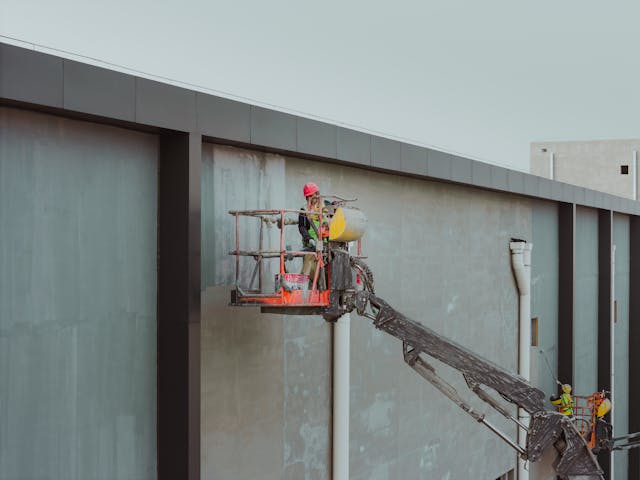
Authorized user training forms the foundation of fall protection competency. This certification ensures you can safely use fall protection equipment in your daily work.
Training begins with hazard recognition. You learn to identify unprotected edges, holes, unstable surfaces, and other fall dangers. This includes understanding that fall hazards aren’t always obvious—a 6-foot drop onto rebar poses the same deadly risk as a 6-foot drop to concrete.
Equipment familiarization covers every component of personal fall protection systems. You’ll learn about different harness styles, when to use each type, and how to adjust them properly. Improper harness fit kills workers who fall—straps that are too loose allow you to slip out during a fall, while overly tight straps can cause suspension trauma if you’re left hanging.
Anchor point selection is critical. Not every structural element can serve as an anchor. Training teaches you to identify suitable anchor points (capable of supporting 5,000 pounds per attached worker) and calculate swing fall hazards. A worker anchored to the side of a structure who falls can swing like a pendulum, striking obstacles with lethal force.
You’ll practice connecting lanyards and self-retracting lifelines correctly. The difference between a snap hook facing in versus out, or clipping to the wrong D-ring, can mean the difference between a safe arrest and a fatal fall.
Fall clearance calculations prevent workers from hitting lower levels during a fall. Your lanyard length, deceleration distance, harness stretch, and worker height all factor into calculating total fall distance. A 6-foot free fall with a 3.5-foot deceleration distance means you need at least 10 feet of clearance below your working surface—if you’re only 8 feet up, you’ll hit the ground before your fall arrest system fully engages.
Equipment inspection procedures ensure your gear remains safe. Daily visual inspections before each use, checking for cuts, abrasions, burn marks, chemical damage, and other defects. Training teaches you what constitutes damage serious enough to remove equipment from service.
Most authorized user courses take 2-4 hours and include hands-on practice with actual equipment. You should leave training confident in your ability to harness up, tie off correctly, and work safely at heights.
Competent Person Responsibilities and Training
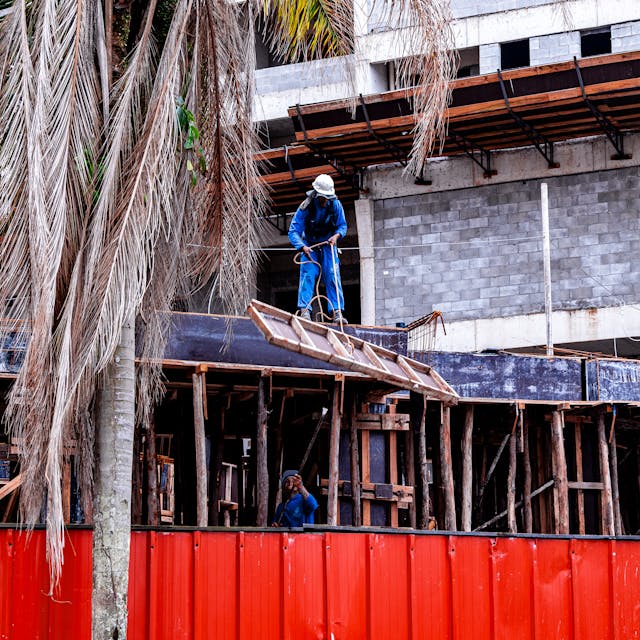
Competent person training prepares supervisors and safety professionals to manage comprehensive fall protection programs. This advanced certification carries significant responsibility—competent persons are legally accountable for worker safety at heights.
The role requires conducting detailed fall hazard surveys before work begins. Competent persons walk the site, identify every potential fall hazard, and determine appropriate protection for each scenario. They document findings and create site-specific fall protection plans.
Equipment approval falls to competent persons. They verify that harnesses, lanyards, anchors, and other components meet OSHA and ANSI standards. They ensure compatibility between system components—not all manufacturers’ equipment works together safely.
Training authorized users is a primary duty. Competent persons deliver hands-on instruction, demonstrate proper techniques, and verify that workers understand and can apply safety procedures. They maintain training records documenting who received training, when, and what topics were covered.
Annual equipment inspection is mandatory. OSHA requires a competent person to inspect all fall protection equipment at least once a year. This goes beyond the daily user inspections—competent persons examine equipment thoroughly, test components, and make remove-from-service decisions. They maintain inspection records and manage equipment inventory.
Site supervision during elevated work keeps workers safe. Competent persons monitor work practices, correct unsafe behaviors immediately, and have the authority to stop work when hazards aren’t properly controlled. This authority is non-negotiable—if they must call someone else to approve stopping work, they’re not functioning as the competent person.
Rescue planning is often overlooked but critical. Competent persons develop written rescue plans before work begins. If a worker falls and is left suspended in a harness, suspension trauma can kill within minutes. Rescue plans specify who responds, what equipment they use, and how they execute rescue operations.
Competent person courses typically run 16 hours over two days. Training includes extensive hands-on exercises, written exams, and practical evaluations. Topics cover OSHA regulations in depth, ANSI Z359 standards, equipment specifications, system design basics, training techniques, inspection procedures, and rescue planning.
Certification lasts two years. OSHA doesn’t specify the frequency of competent person training, but industry best practices and ANSI standards recommend biennial recertification. Many employers require annual refresher training to maintain competency.
Qualified Person Requirements
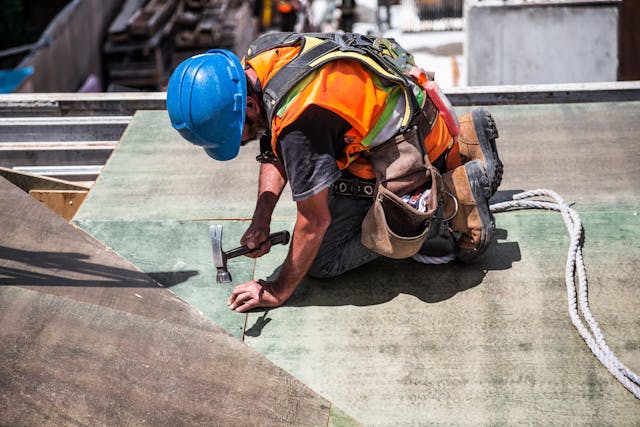
Qualified person status requires recognized credentials or demonstrated expertise beyond standard training courses. This level addresses the engineering and design aspects of fall protection.
Qualified persons typically hold engineering degrees or professional certifications in safety, structural engineering, or related fields. Alternatively, they demonstrate extensive knowledge through years of experience, successfully solving fall protection challenges.
Their responsibilities include designing horizontal lifeline systems, calculating load distribution across multiple anchor points, engineering permanent fall protection installations, certifying that systems meet design specifications, and evaluating structural capacity to support fall protection loads.
When a job site needs custom fall protection (perhaps on a unique structure or in an unusual configuration), qualified persons design solutions. They perform engineering calculations, specify appropriate equipment, and certify installations.
Many qualified persons work as safety engineers, consultants, or manufacturers’ technical representatives. On large projects, they might be dedicated project engineers. Smaller projects often contract with qualified persons for system design, then rely on competent persons for implementation and daily management.
Training for qualified persons varies significantly based on prior education and experience. Engineers might take specialized courses focusing on fall protection system design. Others complete comprehensive programs that include structural analysis, load calculations, and equipment specifications. These courses often exceed 16 hours and may require prerequisites.
Unlike authorized user or competent person certifications that expire after set periods, qualified person status is generally ongoing once demonstrated. However, continuing education ensures qualified persons stay current with evolving standards, new equipment, and changing regulations.
Getting Certified: Training Providers and Formats
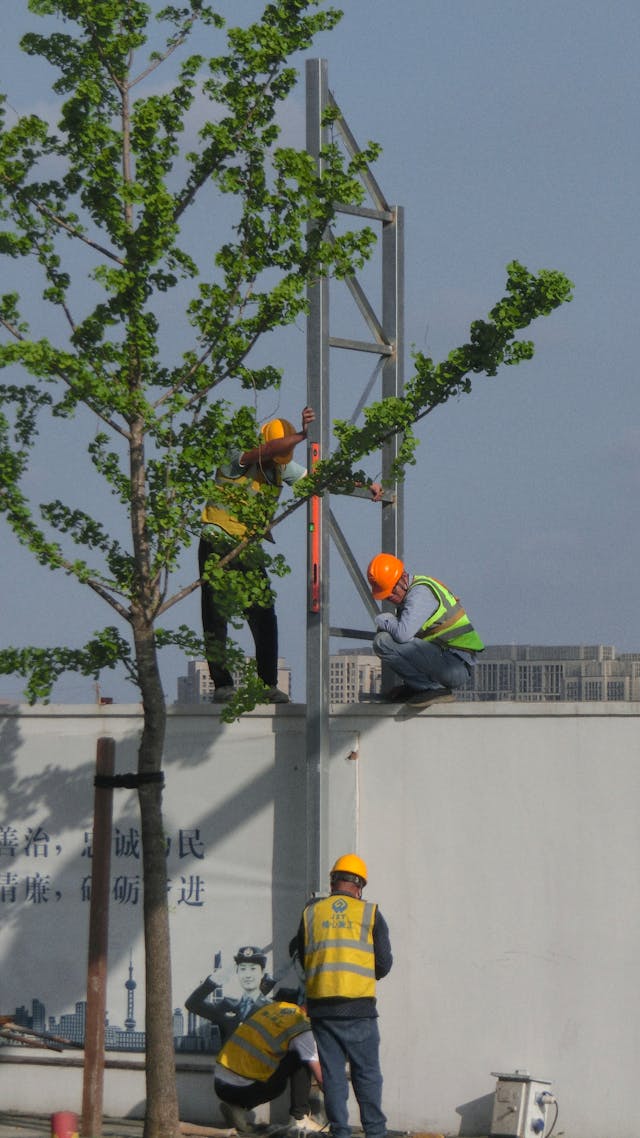
Multiple pathways lead to fall protection certification. Choosing the right training depends on your needs, budget, learning style, and schedule.
Online Training offers convenience and lower cost. Courses run $50-$150 for authorized user training and $200-$400 for competent person certification. You work at your own pace, pausing and resuming as needed. Online courses use video demonstrations, interactive modules, and knowledge checks. Upon passing the final exam (typically requiring 70% or higher), you receive a printable certificate immediately.
Online training works well for foundational knowledge but lacks hands-on practice. You watch demonstrations of harness donning and equipment inspection, but don’t physically perform these tasks under instructor supervision. For authorized user training, consider pairing online coursework with on-site practical instruction from your employer’s competent person.
In-Person Training provides hands-on experience and immediate feedback. Instructors demonstrate techniques, watch you practice, and correct errors in real-time. You handle actual equipment, practice tying off to various anchor points, and experience what a properly fitted harness feels like.
In-person authorized user courses typically take 2-4 hours and cost $75-$200 per person. Competent person training runs 16 hours (two full days) at $800-$1,500 per person. Many training companies offer on-site group training at competitive rates when you have multiple workers to certify.
Training Providers include:
- OSHA-authorized training institutes
- Equipment manufacturers (3M, MSA, Miller, FallTech, and others often provide excellent training.
- Professional safety organizations
- Private safety training companies
- Union training centers
- Community colleges with construction programs
Verify that training aligns with OSHA 29 CFR 1926.503 requirements and follows ANSI Z359.2 standards. Ask whether the provider offers IACET continuing education units (CEUs), which many employers prefer.
Employer-Provided Training is common and often effective. Your company’s competent person can train you as an authorized user, provided they follow OSHA requirements and document the training properly. This saves money and allows training on the specific equipment and systems you’ll actually use.
Competent person training generally requires outside providers unless your company employs a qualified person who can deliver comprehensive instruction.
Regardless of format, training must cover the topics OSHA specifies: nature of fall hazards, correct procedures for installing and using fall protection systems, proper use of equipment, role in fall protection plans, and applicable OSHA standards.
Documentation and Certification Requirements
OSHA doesn’t require certificates or cards. The legal requirement is documented training, not a laminated credential. However, the documentation must meet specific standards.
Written Certification Records must include:

- Name or other identification of each trained employee
- Date(s) of training
- Signature of the person who conducted the training or the employer’s signature
This creates a paper trail proving compliance. Many employers use standardized forms, but any written record containing these three elements satisfies OSHA requirements.
The employer must verify compliance by preparing these written records. “The employer shall verify compliance with paragraph (a) of this section by preparing a written certification record”—that’s direct language from 29 CFR 1926.503(b).
Many training providers issue certificates upon course completion. These certificates serve as convenient proof of training and typically include the required information, as well as details on course content and duration. However, the certificate isn’t the compliance document; instead, the employer’s written verification is.
Proof of Training becomes critical during OSHA inspections. Inspectors routinely ask to see fall protection training records. If you can't produce documentation proving workers received required training, citations and fines follow (even if workers actually did receive training). Picture a site audit where an OSHA inspector demands training records for every worker above 6 feet (without instant access, work stops until compliance is proven). Or a foreman, mid-task, quickly scanning a digital log to confirm which crew members are authorized for harness work before lift-off. The common saying applies: "If it isn't documented, it didn't happen."
For workers, keep copies of your training certificates with your other credentials. Store them in your digital credential management system so you can produce proof immediately when contractors or inspectors request it. Many workers carry physical copies in their wallets or keep photos on their phones, but these get lost or damaged. Digital backups protect your investment in training.
Record Retention requirements vary. OSHA mandates that the most recent training certification be kept on file. When an employee receives updated training, you can dispose of the previous record. Best practice involves maintaining training records for the duration of employment plus several years afterward.
Renewal and Retraining Requirements
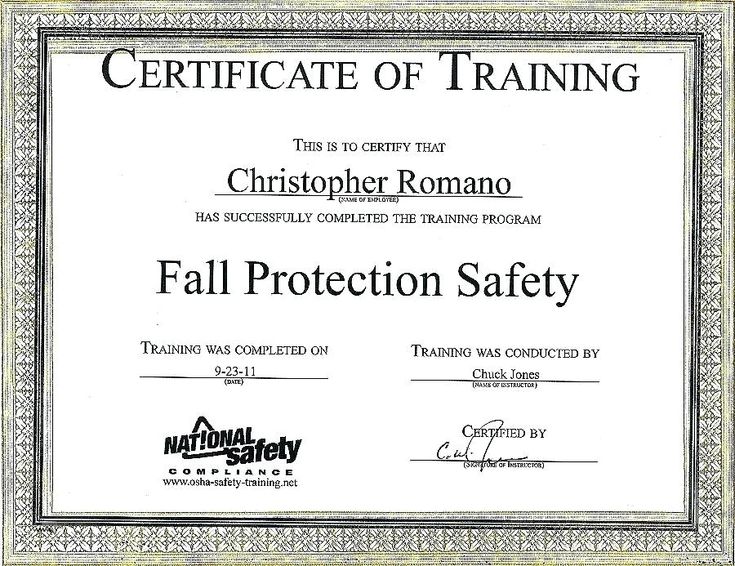
Fall protection training isn’t one-and-done. OSHA requires retraining under specific circumstances, and industry standards recommend regular refresher courses.
OSHA-Mandated Retraining occurs when:
- Changes in fall protection systems or equipment render previous training obsolete. If your employer switches from traditional lanyards to self-retracting lifelines or installs a new type of anchor system, you need training on the new equipment before using it.
- Changes in the workplace create new fall hazards. Renovations, new construction phases, or modified work procedures that introduce different fall scenarios require updated training.
- Worker performance indicates an inadequate understanding. If a competent person observes you using equipment incorrectly, connecting to inappropriate anchor points, or demonstrating other unsafe practices, retraining is mandatory (even if you completed certification recently).
These triggers apply to all training levels. An authorized user who demonstrates poor equipment inspection technique needs retraining. A competent person who fails to identify obvious fall hazards may need to retake the full competent person course.
Industry Standard Renewal Periods:
- Authorized User Training: OSHA doesn’t specify an expiration, but industry consensus recommends retraining every 2 years. Many employers require annual refreshers to maintain worker competency and address any changes in equipment or procedures.
- Competent Person Training: Industry best practice and ANSI Z359.2 standards recommend recertification every 2 years. This keeps competent persons current with evolving standards, new equipment types, and changing regulations. Some employers, particularly those working on U.S. Army Corps of Engineers projects, mandate 8-hour refresher courses annually.
- Qualified Person Training: No fixed renewal period exists, but continuing education ensures qualified persons stay current. Professional engineers maintain their licenses through continuing education that often includes fall protection topics.
Practical Renewal Approach:
Track your certification dates. Set calendar reminders 60 days before your two-year anniversary to schedule refresher training without gaps in certification. Many employers handle this automatically, but you’re responsible for maintaining current credentials. Don’t assume your employer is tracking for you.
Consider voluntary refresher training annually, even when not required. A one-hour review session reinforces critical information, introduces new equipment or techniques, and demonstrates your commitment to safety. The small time investment significantly reduces your risk of making dangerous mistakes.
When regulations change (as they did in California in 2025), seek out training that addresses the updates. Don't rely on outdated information that could put you at risk or leave you non-compliant.
Special Considerations for Different Trades
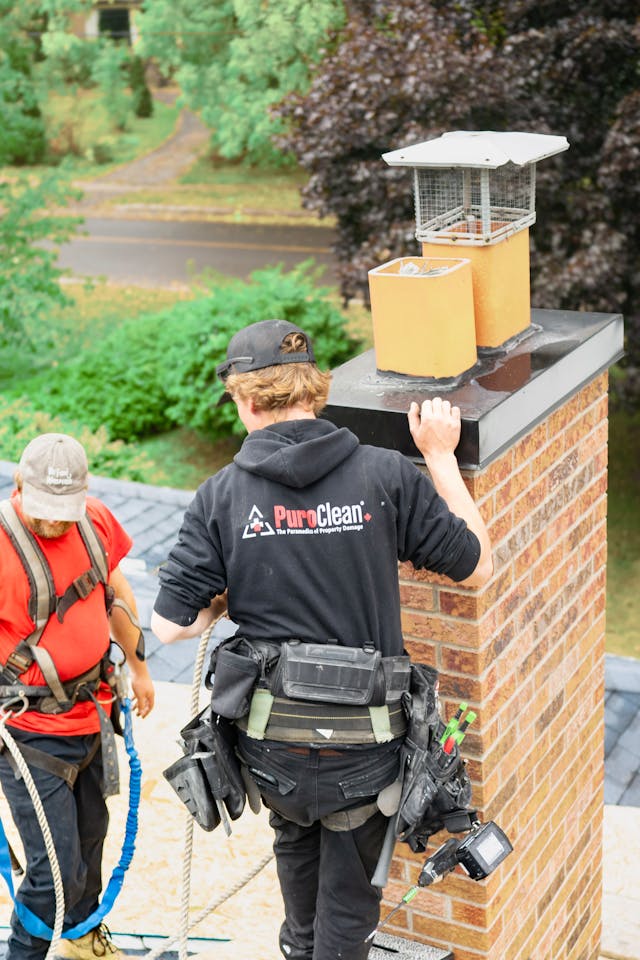
Fall protection requirements vary by trade and work type. Understanding trade-specific applications helps you focus on relevant scenarios.
Roofing involves some of construction’s highest fall risks. Steep slopes, unguarded edges, and slippery surfaces combine to create deadly hazards. Roofers working on slopes steeper than 7:12 in California now need fall protection at any height. Warning line systems, safety monitoring, and controlled access zones have specific uses and limitations in roofing work that standard fall protection training might not cover thoroughly. Seek roofing-specific training if this is your primary trade.
Steel Erection follows Subpart R with unique provisions. Steel erection workers generally need fall protection at 15 feet or more. Connectors—those actively receiving and connecting steel members—must have fall protection equipment available at 15 feet, but don’t need to actually tie off until reaching two stories or 30 feet, whichever is less. This phased approach recognizes the unique challenges of steel connection work. Controlled decking zones and different trigger heights demand training beyond general fall protection. Steel erectors should complete fall protection training that specifically addresses 29 CFR 1926.750-761.
Scaffolding Erectors face fall hazards while building the very structures that protect other workers. Fall protection isn’t required during scaffold erection until the scaffold reaches 10 feet, but safe practices require protection even at lower heights. Training should address fall protection during scaffold assembly and the transition from protected to unprotected work as structures rise.
Telecommunications Tower Climbers work in extreme environments at heights of up to 1,000 feet. 100% tie-off rules, climbing systems, rescue planning, and working from suspension all require specialized training beyond standard construction fall protection. Tower climbing demands its own specific certification that goes well beyond the competent person level.
HVAC and Mechanical Contractors frequently work on rooftops accessing equipment. Leading-edge work around roof openings, near skylights, and during equipment installation with temporary edge protection creates fall scenarios that require careful planning. Training should emphasize roof work and equipment-specific hazards.
Residential Framers historically worked under California’s 15-foot trigger height, but now face 6-foot requirements. This dramatically changes fall protection strategies during framing operations. Framers should seek training that is up to date with current California requirements or federal standards, depending on location.
Regardless of trade, ensure your fall protection training addresses the specific equipment and scenarios you encounter. Generic training provides foundations, but trade-specific application makes knowledge practical and relevant.
Common Training Gaps and How to Address Them

Standard fall protection training covers requirements well, but real-world application often reveals knowledge gaps.
Rescue Planning receives inadequate attention in many training programs. Workers learn to prevent falls, but not what happens if prevention fails. Suspension trauma (blood pooling in the legs of a suspended worker) can cause death within minutes. Every fall protection plan must include rescue procedures, yet many workers couldn't explain how rescue would occur at their worksite.
Solution: Ask your competent person about rescue plans before starting elevated work. Understand who performs rescue, how they’re summoned, what equipment they use, and the expected response time. If no plan exists, raise the issue immediately as this is a serious OSHA violation.
Fall Clearance Miscalculation causes workers to strike lower levels during falls. Training teaches the concept, but workers often fail to calculate clearance for their specific situation. Variables include lanyard length (six-foot lanyards are common), deceleration distance (typically 3.5 feet), harness stretch (about 1 foot), worker height (varies), and safety margin (recommended minimum of three feet).
Solution: Before tying off, physically verify clearance below. If working 8 feet above a concrete floor with a 6-foot lanyard, you lack sufficient clearance—you need at least 14 feet. Use shorter lanyards, anchor higher, or use fall restraint systems that prevent falls rather than arresting them.
Anchor Point Misjudgment results from a misunderstanding of the capacity requirements. A 2-inch pipe might look substantial, but it may not support 5,000 pounds per worker. Structural members weakened by rust, previous damage, or improper installation fail under fall loads.
Solution: Use only engineered anchor points or have a qualified person certify structural elements. When in doubt, ask. Never assume something will hold. Portable anchor systems designed for specific applications provide reliable alternatives when permanent anchors don’t exist.
Equipment Inspection Shortcuts happen when workers skip daily inspections. “I used this harness yesterday, and it was fine” isn’t an inspection. Damage occurs during use—a torn stitch, frayed webbing, or damaged D-ring can develop between shifts.
Solution: Make inspection a routine. Before donning your harness each day, run your hands along every strap to check for damage. Inspect lanyards, connectors, and all components. This takes barely 2 minutes, and it could save your life. Remove damaged equipment from service immediately and mark it clearly so others don’t use it.
Fall protection training isn’t bureaucratic box-checking—it’s the difference between going home safely and becoming a statistic. Falls kill hundreds of construction workers annually and seriously injure thousands more. Proper training, combined with appropriate equipment and rigorous safety practices, prevents these tragedies.
Understanding OSHA requirements ensures compliance, but understanding fall protection principles keeps you alive. Know when you need protection (generally six feet in construction, four feet in general industry, but specific scenarios vary). Know what level of training your role requires (authorized user for most workers, competent person for supervisors and safety roles, qualified person for designers and engineers). Get certified through reputable providers, maintain documentation, and refresh training before certifications expire.
Falls are preventable. Every construction worker who dies from a fall was using inadequate protection, no protection, or using protection incorrectly. Training gives you the knowledge to protect yourself. Applying that knowledge consistently, every time you work at heights, keeps you safe.
Your construction credentials represent your qualifications and earning potential. Fall protection certification is among the most critical credentials you’ll carry as it represents your commitment to staying alive in one of construction’s most dangerous environments.
Manage your fall protection credentials digitally alongside your other certifications. Store certificates where you can access them instantly when contractors or inspectors request them. Track expiration dates and schedule renewals proactively. Treat fall protection training as the life-saving investment it is.
Useful Resources
OSHA Fall Protection Standards:
- Construction Fall Protection (29 CFR 1926.501)
- Fall Protection Training Requirements (29 CFR 1926.503)
- Steel Erection Fall Protection (29 CFR 1926.760)
- General Industry Fall Protection (29 CFR 1910.28)
- General Industry Training Requirements (29 CFR 1910.30)
- OSHA Definitions (29 CFR 1926.32)
OSHA Publications and Guidance:
- Fall Protection in Construction Guide
- OSHA Fall Protection Home Page
- Competent Person Overview
Training Providers:
- OSHA Education Center
- 360training Fall Protection
Standards and Best Practices:
- ANSI/ASSP Z359 Fall Protection Code (Industry consensus standards for fall protection)
California-Specific Information:
- Cal/OSHA Fall Protection Updates (The Official Cal/OSHA site with current regulations)
Frequently Asked Questions
Do I need fall protection training if I only occasionally work at heights?

.svg)
How long does fall protection certification last?
Can I train myself using online courses, or does someone have to train me?
What’s the difference between fall protection and fall prevention?
If I get certified in one state, does it transfer to other states?
What happens if I’m caught working at heights without proper training?
Fall Protection Certifications
Store your fall protection certifications digitally with BuilderFax—instant access when inspectors ask, automated renewal reminders, and disaster-proof backup for all your credentials.
Download now.svg)
.svg)