
Boilermaker Apprenticeship Pathway: Apprentice to Journeyman
At a Glance
- The U.S. Boilermaker apprenticeship, run through the Boilermakers National Apprenticeship Program (BNAP), is a four-year, "earn while you learn" program combining paid on-the-job training with classroom instruction.
- BNAP's published minimum requirements are 576 classroom hours and 6,000 field construction hours.
- Apprentices complete 49 related-studies tests (25 questions each) and must score at least 70% to advance.
- Eligibility requires applicants to be at least 18 years old and hold a high school diploma or GED equivalent.
- Selection under BNAP is based first on welding qualifications and then on random selection. BLS also notes that applicants with prior welding or military experience may receive priority or qualify for a shortened apprenticeship, depending on the applicable program.
- The median annual wage for boilermakers was $76,410 in May 2025, according to the U.S. Bureau of Labor Statistics.
Introduction
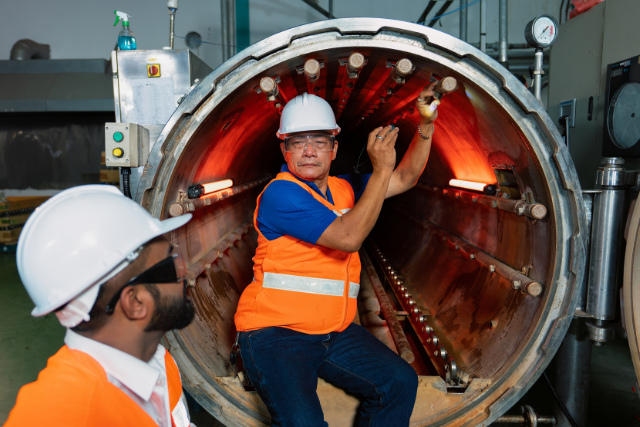
Becoming a journey-level Boilermaker means completing a structured, paid apprenticeship built around welding, rigging, and heavy fabrication skills, not a single certification exam. Boilermakers build and maintain pressure vessels, boilers, tanks, and heat exchangers in power plants, refineries, and industrial facilities, work that demands precision and a strong safety record.
For anyone considering the trade, or an employer trying to understand what a Boilermaker credential represents, it helps to know exactly how the apprenticeship is structured and what it requires.
This guide is based on currently published information from the Boilermakers National Apprenticeship Program, the International Brotherhood of Boilermakers, MOST Trust, and the U.S. Bureau of Labor Statistics.
What Boilermakers Do
Boilermakers assemble, install, maintain, and repair boilers, pressure vessels, tanks, and other large containers that hold liquids and gases under heat and pressure. The work is physically demanding, often involves travel to worksites for extended periods, and frequently centers on outage or turnaround work at power plants and industrial facilities, where equipment is shut down temporarily for maintenance and repair.
The Boilermakers National Apprenticeship Program
In the United States, Boilermaker apprentices train through the Boilermakers National Apprenticeship Program (BNAP), which coordinates training delivered through local Joint Apprenticeship Committees affiliated with the International Brotherhood of Boilermakers. The Boilermakers union also operates a separate Canadian Apprenticeship Program with its own provincial requirements; unless noted otherwise, the figures in this article describe the U.S. pathway through BNAP.
BNAP describes the apprenticeship as an “earn while you learn” program. The BNAP apprenticeship combines paid on-the-job training with classroom instruction, with apprentice wages generally increasing as skills and training progress. BLS confirms this pattern directly: apprentices are paid less than fully trained boilermakers and receive pay increases as they gain skills. However, exact wage schedules are set locally, not nationally.
Eligibility Requirements
According to BNAP's published qualifications, applicants must meet two minimum requirements:
- Age. Applicants must be at least 18 years old and provide reliable proof of age.
- Education. Applicants must be high school graduates or provide proof of equivalent education, such as a GED, along with a transcript or official test results.
Beyond these baseline requirements, selection into a specific local's apprenticeship program is based first on an applicant's welding qualifications, and then on random selection, following the standards and procedures of the National Joint Apprenticeship Committee for the trade.
Separately, BLS notes that apprenticeship applicants with previous welding or other related experience, including military experience, may receive priority and may qualify for a shortened apprenticeship. Confirm with that local whether those provisions apply to a particular BNAP local. Applications remain active for two years; if an applicant has not been indentured within that window, they must reapply.
Veterans have a distinct, confirmed path in. Applicants with an honorable discharge who complete registration with Helmets to Hardhats are placed at the top of a local's applicant registry, giving them direct entry into the apprenticeship program when that local requests apprentices.
How Long Does It Take to Become a Journeyman
The BNAP apprenticeship is a four-year program. BNAP's published minimum requirements for that four-year term are:
- 576 classroom hours of related instruction
- 6,000 field construction hours of on-the-job training
These are minimums, and specific local programs registered through state apprenticeship agencies may set additional or region-specific requirements. For example, a Washington State-registered Boilermaker apprenticeship standard (Local 104 & Puget Sound Employers) lists a term of 6,000 hours, consistent with BNAP's national minimum.
This differs meaningfully from the union's separate Canadian program: published provincial apprenticeship standards for Boilermakers in Canada (for example, in British Columbia and Saskatchewan) describe three-year programs with different total hour requirements, since they operate under separate provincial apprenticeship systems rather than BNAP.
Testing and Related Instruction
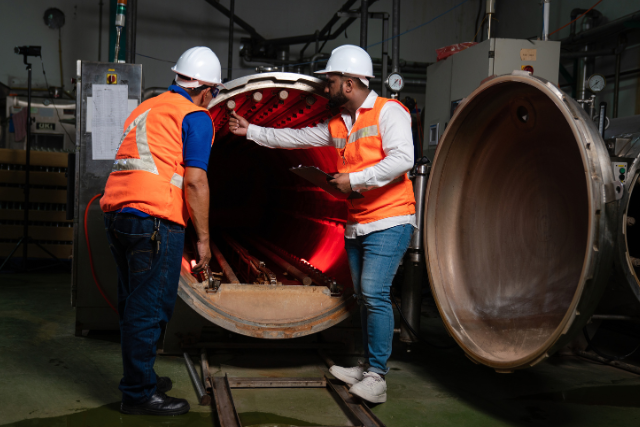
Classroom learning in the BNAP apprenticeship is organized around a series of related-studies lessons, each followed by an assessment. According to BNAP, apprentices complete 49 total tests over the four-year program; each test contains 25 questions, and apprentices must score at least 70% to move on to the next lesson.
Curriculum is organized by year, with distinct coursework assigned to each of the four years of the program. BNAP does not publish a detailed public breakdown of every topic by year. Still, the union's broader apprenticeship materials describe core skill areas taught across the program, including welding, blueprint reading, rigging, layout and fabrication, tube rolling, cutting, knot tying, hand signals, and reeving and equipment use. These figures represent BNAP's published national minimums for the U.S. program. Local standards may add to them, and BLS notes that applicants with prior experience may qualify for a shortened apprenticeship in some programs.
Safety and Skills Training Through MOST
Alongside the core apprenticeship, Boilermakers train and test through MOST (Mobilization, Optimization, Stabilization, and Training), a joint labor-management trust affiliated with the Boilermakers union and the National Association of Construction Boilermaker Employers, introduced in 1989.
MOST develops and delivers safety and skills programs used across the trade, including a 10-hour Construction Safety & Health training course and the Common Arc Program, a related welder-testing program established in 1988 that conducts mass weld qualifications nationally, with each welder obtaining a certification valid for six months.
MOST also developed the Boilermaker Code, a training program focused on craft performance standards. These programs run alongside, rather than replace, the core BNAP apprenticeship curriculum.
Welding and Code Qualifications
Welding is central to the Boilermaker trade, and welding qualifications matter even before an apprentice is selected, since BNAP's selection process is based first on welding ability. Boilermakers may pursue additional code-welding qualifications depending on the specific work they perform.
Applicable welding and pressure-vessel requirements can involve standards established by organizations such as the American Society of Mechanical Engineers (ASME) and requirements administered or recognized by the National Board of Boiler and Pressure Vessel Inspectors.
The specific welding processes and code qualifications an individual Boilermaker holds depend on their training, testing, and the work they take on, and should be confirmed against current ASME and National Board requirements rather than assumed.
BLS also notes that some states require boilermakers to hold a license, with requirements that vary by state and typically include work experience and a passing exam score, so check state-specific licensing separately from union apprenticeship or code-welding qualifications.
From Apprentice to Journeyman
After completing the apprenticeship's required field and classroom training and passing the required tests, an apprentice can advance to journey-level status, subject to applicable program and local requirements. Journey-level Boilermakers have completed the apprenticeship requirements and are qualified to perform journey-level work within the trade, with additional qualifications required for certain specialized work, such as specific code-welding processes or state licensure where applicable.
Continued training does not stop at journey-level, however. BNAP and MOST both note that journeymen continue receiving training throughout their careers, including through programs like the MOST Leadership Program, which prepares experienced Boilermakers to manage job sites.
Career Paths After Journeyman Status
Beyond field work, experienced journey-level Boilermakers can move in several directions depending on their local market and additional training. These include site leadership or supervisor roles supported by programs like the MOST Leadership Program, specialized code-welding work under ASME and National Board requirements, instructor roles at local training centers, or elected positions within the local union.
As with any trade, how far and how quickly a Boilermaker advances into these roles depends on individual experience, additional training completed, and local opportunities, rather than being an automatic step after journeyman status.
Final Thoughts
Becoming a journey-level Boilermaker in the United States means completing BNAP's four-year apprenticeship, with published minimums of 576 classroom hours, 6,000 field construction hours, and 49 related-studies tests passed at 70% or higher.
BNAP's published selection process considers welding qualifications first, followed by random selection, while additional experience-based preferences or shortened training may apply depending on the specific apprenticeship program. Additional safety and skills training continues through programs like MOST even after reaching journeyman status.
Because local and state-registered standards can add to BNAP's national minimums, and because the Canadian program follows a separate structure, confirm exact requirements with the local Joint Apprenticeship Committee before applying.
Useful Resources
- Boilermakers National Apprenticeship Program: How to Apply
- Boilermakers National Apprenticeship Program: Minimum Requirements
- International Brotherhood of Boilermakers: Apprenticeship Program
- U.S. Bureau of Labor Statistics: Occupational Outlook Handbook, Boilermakers
- MOST Trust: Common Arc Program — https://mostprograms.com/program/common-arc-program/
Frequently Asked Questions
Do I need welding experience to apply for a Boilermaker apprenticeship?

.svg)
Where do I apply?
What happens if I apply but am not selected?
Are Boilermaker apprentices paid during training?
Do veterans get priority for the Boilermaker apprenticeship?
Can prior experience shorten the apprenticeship?
What happens if I score below 70% on a related-studies test?
Is a Common Arc welding certification the same as journey-level status?
Do Boilermakers need a state license?
Keep Your Apprenticeship Records in One Place
Between field hours, classroom tests, welding qualifications, and MOST safety training, Boilermaker apprentices accumulate a lot of records across a four-year program. BuilderFax lets you store your training records and credentials in one place, so they're easy to find and share with employers, JATCs, or other organizations when proof of training is needed.
Book a Demo.svg)
.svg)