

The Hidden Cost of Unverified Subcontractors — and Who Pays for It

At a Glance
- Unverified subcontractors expose general contractors to legal liability, financial penalties, and project delays.
- Subcontractor risk is not just a safety issue — it directly affects project margins and audit outcomes.
- Liability for unverified workers often falls on the general contractor, not the subcontractor.
- Credential gaps can trigger OSHA citations, prevailing wage violations, and contract termination.
- Verifying subcontractors before mobilization is the most effective way to control subcontractor compliance costs.
- Digital credential management platforms like BuilderFax make verification trackable and audit-ready.
What Are Unverified Subcontractors in Construction?
Quick answer: Unverified subcontractors are workers or firms that begin work on a project without confirmed licenses, valid certifications, or documented credentials.
This is not about poor workmanship. An unverified subcontractor can be highly skilled but still create serious compliance gaps because their paperwork has not been checked, is expired, or simply does not exist.
Common verification gaps include:
- No valid trade license (electrical, HVAC, plumbing, etc.)
- Expired safety certifications (OSHA 10/30, confined space, fall protection)
- Missing insurance or workers’ compensation coverage
- Unverifiable apprenticeship or journeyman credentials on prevailing wage jobs
- No proof of required training for hazardous work environments
The distinction matters: a compliance gap is a documentation failure. A performance issue is a quality failure. Both cost money, but compliance gaps can shut a project down entirely.
The Hidden Costs of Unverified Subcontractors
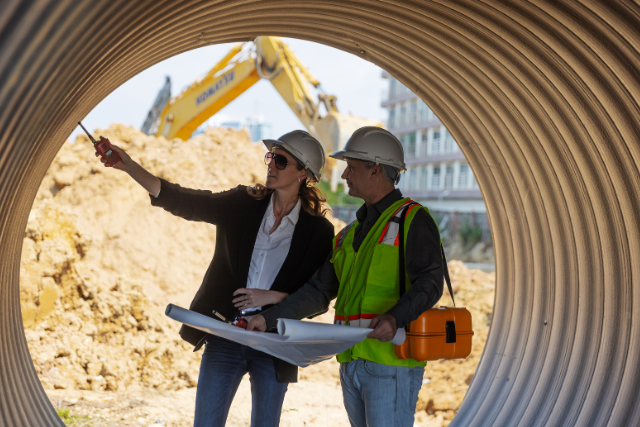
Most contractors think about subcontractor risk in terms of poor work quality. The actual financial exposure runs much deeper.
Legal and regulatory penalties
OSHA fines for worksite violations can reach $16,131 per citation for serious violations, and up to $161,323 for willful or repeat offenses. If an unverified subcontractor caused the unsafe condition, the general contractor is still named in the citation. Ignorance of a subcontractor’s credential status is not a valid defense.
Prevailing wage and classification violations
On public infrastructure and government projects, prevailing wage rules require specific pay rates and classifications. Unverified workers who are miscategorized — or whose apprenticeship status cannot be documented — can trigger wage restitution orders, project suspension, and debarment from future public contracts.
Insurance claim denials
If an unverified subcontractor is injured on site and lacks workers’ compensation coverage, the general contractor’s policy absorbs the claim. That raises premiums and, in serious cases, can void coverage entirely.
Rework and delay costs
Work done by an unlicensed or uncertified subcontractor may not pass inspection. Failed inspections mean rework, re-inspection fees, schedule slippage, and in some cases, liquidated damages triggered by contract deadlines.
All of these represent hidden costs of unverified subcontractors — expenses that never appear in the original project estimate.
Who Is Liable for Unverified Subcontractors?
Quick answer: In most jurisdictions, the general contractor holds primary liability for subcontractor compliance on their project site.
This is the part that most contractors underestimate. When a subcontractor works on your site without valid credentials, regulators do not simply go after the subcontractor. The general contractor is the responsible party under OSHA’s multi-employer citation policy, prevailing wage statutes, and most state licensing laws.
On union-heavy projects or government contracts, this exposure is even higher. Compliance documentation is subject to audit at any time, not just at project close.
Subcontractor compliance is not something you can delegate and forget. It is something you own.
How Unverified Subcontractors Increase Safety Risks
Workers without current safety certifications are statistically more likely to be involved in incidents. That is not a judgment — it reflects the purpose of certification: to confirm that a worker has received specific safety training for specific hazards.
An electrician without a current arc flash certification working in a high-voltage panel is a direct liability. An HVAC technician without confined space training entering a mechanical room presents the same problem. If an incident occurs, the lack of verified credentials compounds the legal and financial consequences significantly.
Beyond individual incidents, unverified workers create broader site safety exposure:
- They may not know site-specific protocols or emergency procedures.
- Their presence may put the general contractor out of compliance with project safety plans.
- On prevailing wage or government projects, their classification status can affect the entire workforce record.
Subcontractor safety risk is not theoretical. It shows up in incident reports, OSHA investigations, and insurance claims.
How Unverified Subcontractors Cause Delays and Rework
Failed inspections are one of the most predictable consequences of unverified subcontractor work.
When an inspector identifies that work was performed by an unlicensed or uncertified trade, they can — and often do — require that work to be redone by a qualified party. That means:
- Scheduling a licensed subcontractor to redo completed work
- Re-inspections that take days or weeks, depending on the jurisdiction
- Cascading delays to downstream trades waiting on that scope
- Potential liquidated damages if the project had hard completion deadlines
The subcontractor risk cost here is not just the rework itself. It is the full schedule impact across all trades that follows.
In EPC and large commercial projects, a single compliance gap in one trade can hold up mechanical commissioning, electrical sign-off, or certificate of occupancy — affecting the entire project delivery.
Who Pays for the Cost of Unverified Subcontractors?
Quick answer: Usually, it is the general contractor who pays this cost, through fines, rework costs, schedule penalties, and increased insurance premiums.
Here is how subcontractor risks cost flows in practice:
The subcontractor may share liability in some situations, but the general contractor is the party with the contract, the site control, and the compliance obligation. Recovery from a subcontractor after the fact is possible — but slow and expensive.
How Credential Verification Prevents These Costs
Verifying credentials before mobilization is the most direct way to reduce the hidden costs of unverified subcontractors.
The verification process does three things:
- Confirms that workers are qualified for the scope they are being hired to perform
- Creates a documented record that demonstrates due diligence during any audit or investigation
- Flags expiring or expired credentials before they become a compliance gap on site
When subcontractor compliance is tracked digitally and centrally, compliance teams can see the full credential status of every worker on every project. That removes the spreadsheet-and-email approach that most HR and compliance teams are still using — and that fails consistently under audit pressure.
BuilderFax makes credential records searchable, verified, and accessible to contractors in real time. When a compliance question comes up during an audit or site inspection, the answer is already documented.
How to Verify Subcontractors Before They Start Work

A practical pre-mobilization checklist:
Step 1 — Collect credentials before onboarding
Request license numbers, certification documents, and insurance certificates before a subcontractor is cleared to enter the site.
Step 2 — Verify against the issuing source
Do not accept self-reported credentials at face value. Cross-check license numbers with state licensing boards and certification numbers with issuing bodies.
Step 3 — Check expiration dates
A certification issued three years ago may have expired. Set alerts for renewals on credentials with a fixed validity period.
Step 4 — Document everything
Store verified credentials in a system that timestamps the verification. This is your audit trail.
Step 5 — Repeat for each project
Subcontractor compliance is not a one-time check. Workers rotate between projects. Credentials expire mid-project. Verification needs to be continuous.
Platforms like BuilderFax centralize this process so contractors can manage subcontractor compliance without building a manual tracking system from scratch.
Unverified subcontractors are not just a safety concern. They are a direct financial and legal exposure for general contractors. The fines, rework costs, schedule penalties, and audit failures that follow a compliance gap almost always fall on the general contractor — not the subcontractor.
Subcontractor compliance is a management discipline, not a paperwork formality. Treating it that way, with a consistent process and a system that supports it, is what separates contractors who pass audits from those who fail them.
Useful Resources
Frequently Asked Questions
What are unverified subcontractors?

.svg)
What are the hidden costs of unverified subcontractors?
Who is responsible for subcontractor verification?
How do unverified subcontractors impact project timelines?
.svg)
.svg)

.png)

.png)