

Credential Technology: The 2026 Advantage Every Training Organization Needs

At a Glance
- Paper and PDF certificates cannot be verified without contacting the issuing organization directly, which slows down hiring and audits.
- Credential technology issues digital, verifiable records that carry embedded data about who earned a credential, when, and from whom.
- Digital credentials work by embedding verifiable, structured data directly in the credential so that it can be checked without a manual call to the issuer.
- Training organizations use credential technology to stay connected with graduates instead of losing touch after a course ends.
- Contractors increasingly need a fast way to confirm that a worker's credentials are current, which puts pressure on training providers to issue verifiable records.
- Choosing a platform means weighing standards support, ease of issuance, and how easily learners and employers can check a credential.
Introduction
A printed certificate cannot answer a simple question: is this still valid, and who can vouch for it? That gap is why credential technology has become a defining feature for training organizations growing in 2026, while others struggle to prove the value of what they teach.
For training organizations, this is not a cosmetic upgrade. It changes how employers find graduates, how programs are trusted, and how outcomes are tracked after the certificate is issued. This article breaks down what credential technology actually is, why it matters now, and what to look for when evaluating a platform.
Why Credential Technology Matters in 2026
Quick answer: Employers and workers now expect credentials that can be checked instantly, not certificates that require a phone call to confirm.
Construction hiring managers, compliance teams, and general contractors are under more pressure to verify job qualifications before work begins. A worker who can't quickly prove a credential may not get called back. Training organizations that issue verifiable, digital credentials give their graduates an advantage: proof that travels with them and can be checked in seconds.
At the same time, training providers are being asked to demonstrate program value beyond a completion rate. Digital credentials that show who is actively using and sharing what they earned give organizations a clearer picture of real-world impact.
Why Traditional Certificates Are No Longer Enough
Quick answer: A paper or static PDF certificate can be lost, altered, or impossible to verify quickly, which limits its usefulness to both the learner and the employer.
These limitations affect more than the worker holding the certificate. They affect the training organization’s reputation, since a credential that cannot be trusted reflects on the program that issued it.
What Is Credential Technology?
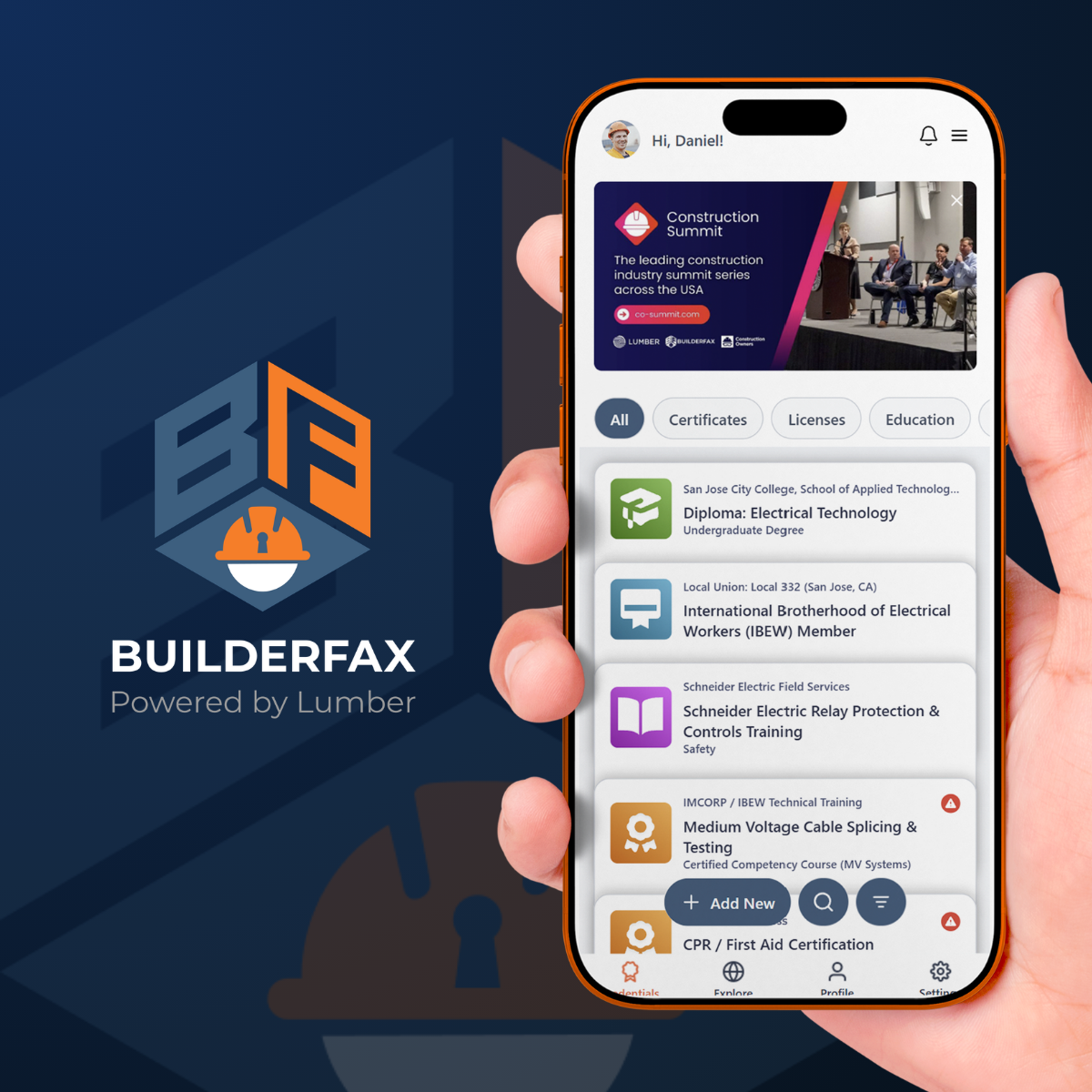
Quick answer: Credential technology refers to digital tools and standards used to issue, store, verify, and share credentials in a way that is portable and checkable without manual follow-up.
In practice, this usually means issuing a digital credential (sometimes called a digital badge or digital certificate) that contains embedded, structured data: the issuer's name, what was earned, the date of issue, and often a link to evidence or criteria. Because that data travels with the credential itself, it can be checked independently, without the employer needing to call or email the training organization to confirm it is real.
Credential technology also typically includes:
- A digital wallet or record where the learner stores all their earned credentials in one place.
- A verification mechanism, such as a link or QR code, that lets anyone check a credential's authenticity without contacting the issuer.
- A way to track renewal or expiration where applicable.
How Credential Technology Improves Trust and Verification
Quick answer: Verifiable digital credentials let anyone confirm a credential is genuine by checking embedded, issuer-signed data instead of relying on a phone call or a document that could be altered.
This works because the credential itself, not just a database entry, carries the proof. A digital badge contains embedded metadata, including the issuer name, what was earned, the date of issue, and a link to evidence, and that metadata travels with the badge wherever it goes. This is different from a static document that looks professional but contains no machine-readable evidence and can be edited by anyone.
For a general contractor trying to confirm a worker’s training before a job starts, this matters directly. Instead of waiting for a callback from a training provider’s office, a verifiable credential can often be checked immediately.
Why Leading Training Organizations Are Investing in Digital Credentials
Quick answer: Digital credentials help training organizations stay visible to graduates and employers long after a course ends, instead of the relationship ending at graduation.
A one-time certificate marks the end of a transaction. A digital credential can mark the start of an ongoing relationship. When a graduate shares a verifiable credential online or with an employer, the training organization’s name travels with it, which reinforces brand visibility every time the credential is checked or shared. Digital credentials support employability and skills-based recruitment and promote lifelong learning through microcredentials, giving training providers a reason to keep engaging graduates with additional courses or renewals rather than treating each program as a single sale.
This shift also gives training organizations something they have historically lacked: visibility into whether their credentials are actually being used, shared, and recognized after the course ends.
Common Challenges Training Organizations Face Without Credential Technology
Quick answer: Without credential technology, training organizations typically face slower verification requests, weaker outcome data, and little visibility into what happens to graduates after certification.
Common friction points include:
- Manual verification requests from employers that consume staff time.
- No reliable way to know how many graduates are actively using their credential in the field.
- Limited ability to differentiate the program from lower-cost competitors offering a similar certificate.
- Difficulty maintaining contact with graduates for renewals, continuing education, or additional training.
- No structured way to connect graduates with employers looking for exactly the skills the program certifies.
Each of these is a visibility problem. Training organizations that cannot see what happens after graduation cannot easily prove the value of the program to funders, partners, or prospective students.
Choosing the Right Credential Technology for Your Organization
Quick answer: Evaluate a platform based on standards support, ease of issuance, verification experience, and how well it fits into an organization’s existing systems.
Questions worth asking before selecting a platform:
- Does the platform support open, portable credential standards, or does it lock credentials into a closed system?
- How easily can staff issue credentials at scale, and does it integrate with the organization’s existing learning management system?
- What does the verification experience look like for an employer checking a credential?
- Can the organization see engagement data, such as how often a credential is shared or checked?
- Does the platform support renewal tracking where credentials expire?
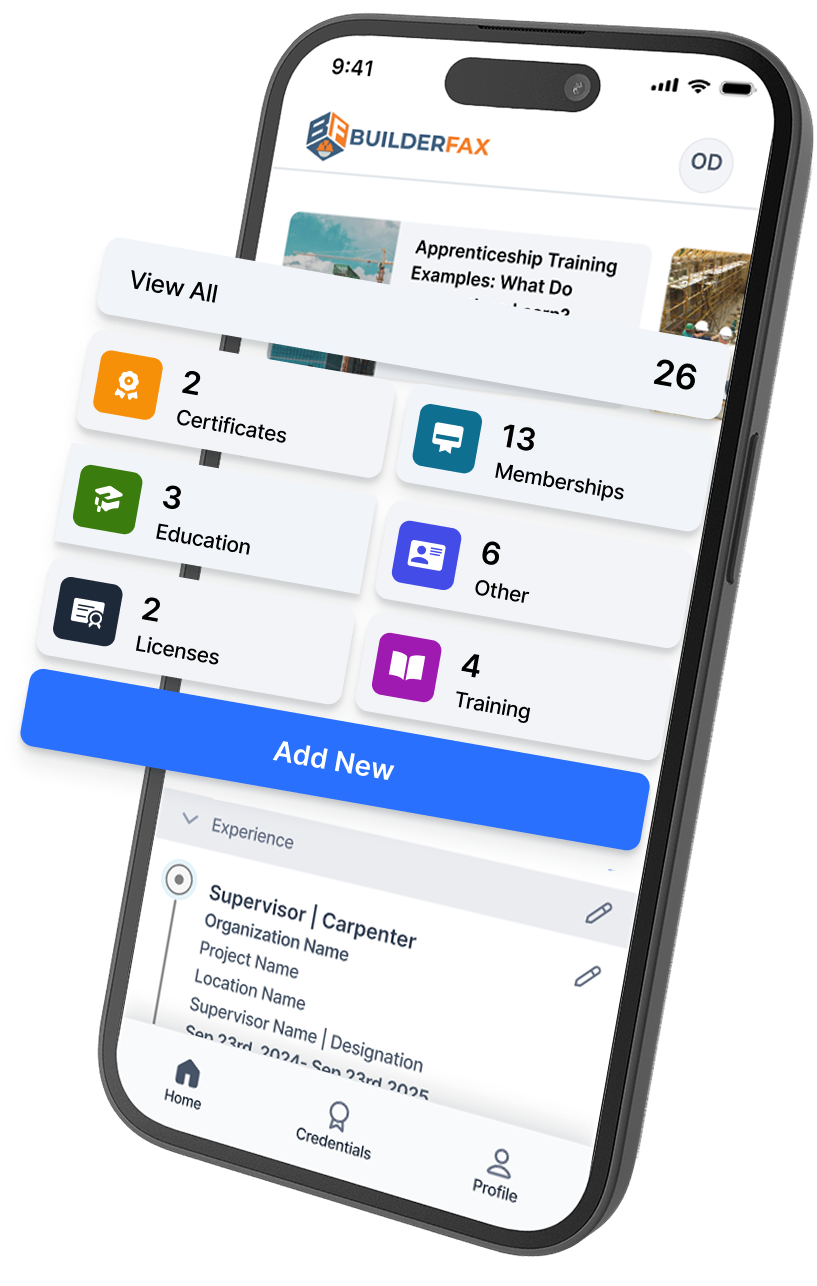
Training organizations that issue NCCER credentials do not need to build this from scratch. BuilderFax is the official credential management platform for NCCER, which means NCCER-issued credentials are automatically added to a learner's Digital Wallet, ready to share instantly by QR code, email, text, or social channels, with real-time notifications when a credential is nearing expiration.
The Future of Workforce Credentials and Training
Quick answer: Workforce credentialing is moving toward portable, verifiable digital records that travel with the worker across employers and projects, rather than paper records tied to a single course.
The direction is clear: credentials are increasingly designed to be checked programmatically and instantly, not just glanced at. For construction specifically, this trend lines up with a broader industry need: contractors, compliance teams, and workers all benefit when a credential's validity can be confirmed quickly and without manual back-and-forth.
BuilderFax is already built for this shift. As the official credential management platform for NCCER, BuilderFax gives workers a Digital Wallet where credentials are automatically added, instantly shareable, and easy for employers to verify on the spot. Training organizations that align with where credentialing is headed, rather than waiting for the industry to catch up, are best positioned to keep their graduates competitive and their programs relevant.
The training organizations gaining ground in 2026 share a common thread: they have moved past static, unverifiable certificates and adopted credential technology that keeps graduates connected, programs visible, and credentials trustworthy. For contractors and workers, this shift means credentials that can be checked in moments instead of days. For training providers, it means a program that proves its value long after the course ends.
Useful Resources
Frequently Asked Questions
What is credential technology?

.svg)
Why are digital credentials replacing paper certificates?
How does credential technology improve verification?
What are the benefits of credential technology for training organizations?
How do digital credentials build trust?
What should organizations look for in a credential technology platform?
Why is credential technology becoming essential in 2026?
Bring Verified Credentials to Every Jobsite
BuilderFax helps training organizations, contractors, and workers manage, verify, organize, and share workforce credentials and training records in one place. That means graduates can carry proof of their training with them, and employers can check it without the back-and-forth of a manual verification request.
Download BuilderFax.svg)
.svg)


.png)