

Why Construction Training Programs Lose Students After Certification

At a Glance
- Most construction training programs end their relationship with students the moment a certificate is issued, leaving both parties worse off.
- Without placement tracking, training organizations have no visibility into whether their graduates actually find work in the trade.
- Students frequently lose certifications, let them lapse, or struggle to present credentials to employers in a usable format.
- The one-time certification model limits revenue and weakens long-term program value.
- Employer trust in training programs drops when there is no verifiable, ongoing record of graduate outcomes.
- Digital credential management gives training organizations a way to stay connected to students throughout their careers, not just during enrollment.
- Programs that track outcomes, enable renewals, and increase employer visibility retain more students and build stronger reputations.
Introduction
A student completes your welding program, passes the assessment, and walks out with a certificate. That is typically where the relationship ends.
Six months later, you have no idea whether they found a job, whether their certification was accepted by an employer, or whether they are even working in the trade. They do not know when their certification expires. And when a contractor asks them to verify credentials, they are fumbling through a folder or searching old emails.
This is the standard experience across most construction training programs in the country. The problem is not the training itself. It is what happens, or more accurately, what does not happen, after certification.
The Drop-Off Is Not Random

Student attrition after certification follows a predictable pattern. It happens because the program structure is built around delivery, not outcomes.
Training organizations invest heavily in curriculum, instructors, facilities, and assessments. The entire operation is designed to get students to the point of certification. Once that happens, the infrastructure stops. There is no follow-up system, no placement loop, and no ongoing connection to the student.
From the student's perspective, they received what they paid for. The certificate is in hand. Unless the program proactively creates a reason to stay engaged, students move on.
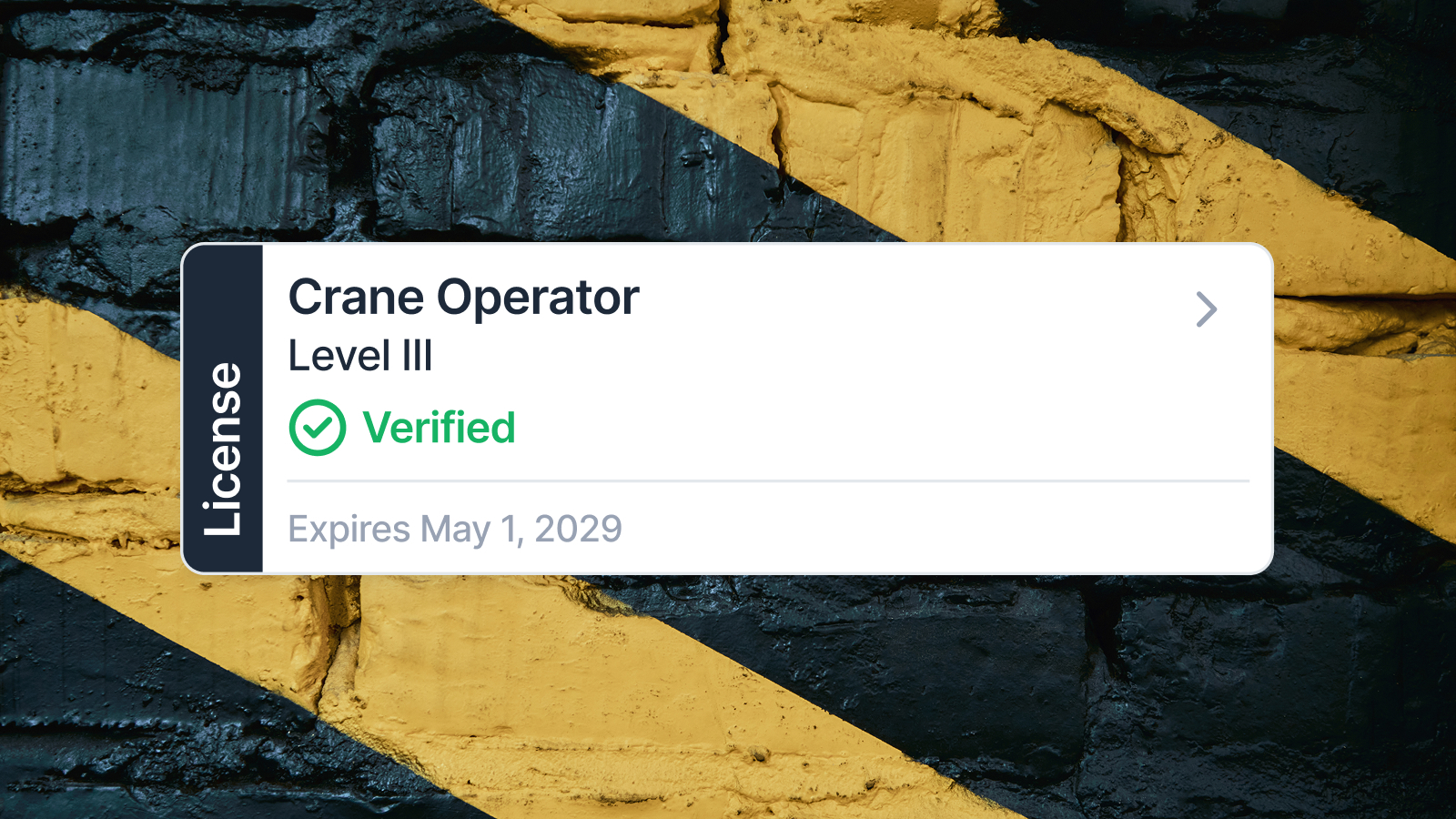
The issue is compounded by how construction credentials work. Many certifications have expiration dates. OSHA 10 and 30 cards expire. Equipment operator licenses require renewal. Welding certifications need periodic re-testing. If no one is reminding students about these timelines, they often let credentials lapse and either stop working legally in certain roles or have to re-train from scratch.
What Training Organizations Are Missing
1. Outcome Data
Most training programs cannot answer a basic question: what percentage of your graduates are employed in the trade within six months of certification?
This is not just an administrative gap. It directly affects your ability to demonstrate value to prospective students, government funders, and employer partners. Programs that cannot show job placement rates are at a disadvantage when competing for enrollment and funding.
Without a system to track where graduates go and how their credentials are being used, you are operating blind. You may be producing skilled workers, but you have no evidence to prove it.
2. Certification Lifecycle Management
Issuing a certificate is step one. Managing that certificate over time is where most programs fall short.
Expiration tracking, renewal reminders, continuing education requirements, and re-certification scheduling are all part of a credential's lifecycle. When training organizations do not manage this lifecycle, students let certifications lapse, employers find unverified workers on site, and the program loses a repeat student who would have come back for renewal training.
This is a revenue loss that is largely invisible. Programs count enrollment numbers but rarely calculate how much renewal and continuing education revenue they are leaving on the table.
3. Employer Visibility
Contractors need to verify worker credentials before putting them on a job site. If your graduates cannot present their certifications in a format that is quick to check and easy to trust, contractors will hesitate.
Paper certificates get lost. PDFs get buried. When a superintendent is standing at a gate trying to clear a crew, a worker who cannot instantly verify their credentials becomes a liability, regardless of how solid their training was.
Programs that issue digital, verifiable credentials make their graduates easier to hire. Programs that hand out paper certificates and walk away make their graduates harder to trust.
4. No Relationship Architecture
Beyond logistics, there is a structural issue. Training programs are transactional by design. Student pays, student trains, student certifies. That is the model.
But construction workers build careers over decades. A student who completes their OSHA 10 today might go on to earn a foreman license, a crane operator certification, and multiple specialty endorsements over the next fifteen years. All of that is additional training, and in the current model, they will get it from whoever happens to be convenient.
There is no mechanism for training programs to stay relevant across a worker's career. No alumni network. No credential wallet that keeps your brand visible. No channel to promote advanced courses to someone who completed a foundational one.
Why This Hurts Your Reputation With Employers
Contractors are your secondary audience, and their opinion of your program matters more than most training organizations realize.
When a contractor hires a worker who claims certification from your program, they expect that certification to be verifiable, current, and meaningful. If verification is difficult or if the credential has lapsed, the contractor loses confidence in your program overall.
Over time, programs that make employer verification difficult get quietly deprioritized. Contractors start to favor workers with credentials from programs that are easier to work with, even if the underlying training quality is similar.
Employer trust is built through visibility and verification. If your credentials are not showing up in the workflows contractors already use to vet workers, your program is at a disadvantage.
What Retention Actually Looks Like
.jpg)
Retention in the context of a training organization does not mean keeping students enrolled indefinitely. It means maintaining a meaningful relationship throughout the student's working life.
That breaks down into a few practical things:
Renewal engagement. A student whose certification is approaching expiration should hear from you first. Automated renewal reminders tied to their certification record are a low-effort way to bring past students back for re-certification or continuing education.
Career progression pathways. If a student completes an entry-level course, they should know what advanced credentials you offer and why those credentials matter for higher-paying roles. A clear pathway keeps your program relevant as the student's career develops.
Employer connection. If contractors can search your graduate database and verify credentials directly, your graduates become easier to hire. That creates a pull effect. Contractors will steer workers toward your training because working with your graduates is simpler.
Digital credential portability. Graduates who carry verifiable digital credentials tied to your program carry your brand into every job site they work on. That is ongoing marketing you do not have to pay for.
The Revenue Case for Staying Connected
The one-time certification model is a ceiling. It limits your revenue to whatever you can charge for initial enrollment and caps growth at enrollment volume.
Programs that manage credentials over time have multiple additional revenue opportunities. Re-certification training. Advanced modules. Continuing education units. Employer verification services. Partnership placements.
None of this requires dramatically expanding your program. It requires staying connected to students you already trained.
A student who completes your foundational safety course is a warm lead for every advanced course you offer, for years. But only if you have a way to reach them.
Useful Resources
- NCCER (National Center for Construction Education and Research) - Industry-recognized credentials and training standards for the construction trades.
- OSHA Training Institute Education Centers - Official resource for OSHA-authorized outreach training programs and certification standards.
- U.S. Department of Labor Apprenticeship Program - Federal apprenticeship resources including funding, registration, and program design guides.
- Association of Union Constructors (TAUC) - Resources for union-affiliated training programs and contractor credential requirements.
- Construction Industry Institute (CII) - Research and best practices for workforce development in construction.
- American Council on Education (ACE) Credit Recommendations - Framework for aligning workforce training with academic credit standards.
Frequently Asked Questions
Why do students stop engaging with training programs after certification?

.svg)
How can training organizations track graduate employment outcomes?
What happens when certifications expire, and students are not reminded?
How does credential visibility affect contractor relationships?
Is there a financial case for investing in credential management systems?
What is a digital credential wallet for construction workers?
How does credential lifecycle management help with program reputation?
.svg)
.svg)


.png)