

Understanding OSHA 10 vs. OSHA 30: Which Certification Do You Need?
.jpg)
OSHA safety training certifications are standard requirements across construction sites in the United States. If you're working in construction, you've likely encountered job postings that specify "OSHA 10 required" or "OSHA 30 preferred." Understanding the difference between these two certifications will help you determine which one advances your career and meets your job requirements.

What Are OSHA 10 and OSHA 30?
Both certifications are voluntary training programs created by the Occupational Safety and Health Administration. They're designed to reduce workplace injuries and illnesses by teaching workers to identify, prevent, and respond to safety hazards on construction sites.
The numbers refer to training hours. OSHA 10 is a 10-hour course, while OSHA 30 is a 30-hour course. Both cover construction safety topics, but they differ significantly in depth and intended audience.
OSHA 10: Entry-Level Safety Training
Who It's For: General laborers, apprentices, and entry-level construction workers who perform hands-on work on job sites.
Course Length: 10 hours, typically completed over two days or through online modules.
What You'll Learn
The OSHA 10 curriculum covers fundamental safety topics that every construction worker should know:
- Fall protection and scaffolding safety
- Electrical hazards and lockout/tagout procedures
- Personal protective equipment (PPE) requirements
- Hazard communication and chemical safety
- Struck-by and caught-in-between hazards
- Material handling and storage
- Hand and power tool safety
- Excavation and trenching basics
Six hours of the training focus on mandatory topics that OSHA requires all courses to include. The remaining four hours cover elective topics that instructors choose based on regional hazards or specific industry needs.
Real-World Application
After completing OSHA 10, you'll receive a wallet card from the Department of Labor. This card proves you've completed basic safety training and understand common job site hazards. Many general contractors require all workers to have this card before stepping onto a site.
Why Every Tradesperson Should Get OSHA 10
If you work in construction—regardless of your trade—OSHA 10 certification should be on your radar. Here's why it's become the industry standard.
Universal Recognition Across All Trades
OSHA 10 isn't just for general laborers. Electricians, plumbers, HVAC technicians, carpenters, masons, ironworkers, and every other trade benefit from this training. The certification covers hazards that affect all construction workers, not just those in one specialty.
When you show up at a multi-trade job site, everyone speaks the same safety language. You'll understand the hazards your neighboring trades face, which makes coordination safer and more efficient. An electrician who understands fall protection can work more safely alongside roofers. A plumber who knows excavation safety can spot problems when working near trenching operations.
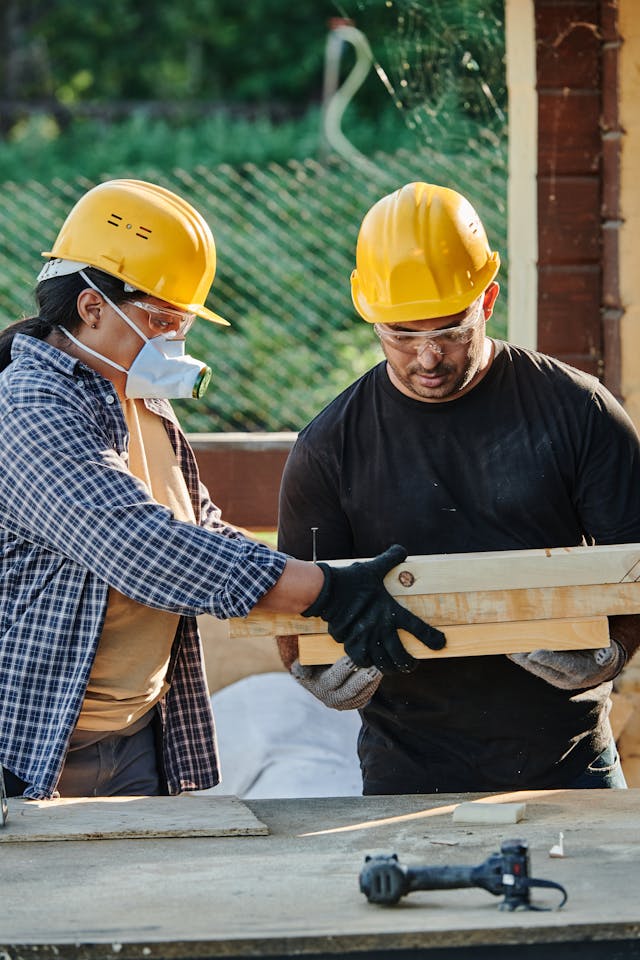
It Opens Doors to More Job Opportunities
Many contractors won't even interview candidates without OSHA 10 certification. The card has become as standard as a driver's license for construction workers. When you're competing for a position against someone with similar experience and skills, having your OSHA 10 card ready gives you an immediate advantage.
This applies whether you're working for a large commercial contractor or a smaller residential builder. As safety standards tighten across the industry, more companies are making OSHA 10 a non-negotiable requirement. Getting certified before you need it means you're always ready when opportunity knocks.
You Learn to Protect Yourself and Others
Construction remains one of the most dangerous industries in America. The training teaches you to recognize hazards before they cause injuries. You'll learn when scaffolding isn't properly secured, how to avoid electrical hazards, and what to do when you see unsafe conditions.
This knowledge protects you every day on the job. More importantly, it helps you protect your coworkers. Construction work depends on teams, and one person's unsafe action can injure multiple people. When everyone on a crew has OSHA 10 training, the entire site becomes safer.
It Demonstrates Professionalism
Showing up with your OSHA 10 card tells employers you take your career seriously. It shows you've invested time and money in professional development and that you understand safety is everyone's responsibility.
For self-employed tradespeople, having OSHA 10 certification builds credibility with clients and general contractors who might hire you for subcontract work. It signals that you run a professional operation and won't create liability issues on their projects.
The Cost Is Minimal Compared to the Benefits
At $60-$150 for the online course, OSHA 10 certification costs less than most tool purchases. You'll complete the training in about 10 hours, which you can spread over several days if taking the online option. Compare that investment to the potential cost of a workplace injury—medical bills, lost wages, and career setbacks—and the training more than pays for itself.
Many unions and apprenticeship programs include OSHA 10 as part of their training, recognizing its value across all trades. If you're paying for it yourself, consider it an insurance policy on your career and physical well-being.
It's Required in More Places Every Year
Even though OSHA 10 is federally voluntary, adoption is spreading rapidly. New York City requires it for all construction workers. Massachusetts and Nevada mandate it for public projects. More jurisdictions are following suit as they see the safety improvements on sites where workers have this training.
Don't wait until your state or city makes it mandatory. Get certified now and avoid the rush when new requirements take effect. You'll also avoid being locked out of jobs while you scramble to complete the training.
OSHA 30: Advanced Training for Supervisors
Who It's For: Foremen, supervisors, project managers, safety coordinators, and anyone with safety responsibilities on a construction site.
Course Length: 30 hours, usually completed over four days or through extended online sessions.
What You'll Learn
OSHA 30 covers everything in the OSHA 10 curriculum but goes much deeper. The additional 20 hours focus on:
- Detailed analysis of OSHA regulations and standards
- Conducting job site safety inspections
- Incident investigation procedures
- Safety program development and implementation
- Risk assessment and hazard analysis
- Workers' rights and employer responsibilities
- OSHA inspection procedures and citations
- Record-keeping and documentation requirements
- Advanced topics in fall protection, excavation, and confined spaces
The training emphasizes prevention strategies and teaches you how to implement safety programs rather than just follow them.
Real-World Application
With an OSHA 30 card, you're qualified to lead safety meetings, conduct toolbox talks, and oversee safety compliance on your crew. Many contractors require this certification for anyone in a supervisory role.
Key Differences at a Glance
Which One Do You Actually Need?

Start with OSHA 10 if:
- You're new to construction or just starting an apprenticeship.
- You work as a general laborer, helper, or tradesperson.
- Your job posting specifically requires OSHA 10.
- You're not in a supervisory position.
- You want to meet basic safety requirements quickly and affordably.
Choose OSHA 30 if:
- You're in or moving into a supervisory role.
- You're responsible for crew safety or site inspections.
- You want to become a foreman or project manager.
- Your company requires it for leadership positions.
- You're a safety coordinator or plan to specialize in safety management.
Consider Getting Both When:
Many workers start with OSHA 10 to meet immediate job requirements, then pursue OSHA 30 as they advance into leadership roles. This progressive approach makes financial and practical sense. You'll apply what you learned in OSHA 10 on the job, then deepen that knowledge with OSHA 30 when you need it.
State and Local Requirements
While OSHA training is federally voluntary, several states and municipalities have made it mandatory:
OSHA 10 Required:
- New York City: Required for all construction workers
- Nevada: Required for certain public works projects
- Massachusetts: Required on public construction projects
OSHA 30 Required:
- New York City: Required for supervisors on all construction sites
- Connecticut: Required for construction supervisors on projects over $100,000
Even in states without mandates, most general contractors require OSHA training as part of their site safety policies. Check your local requirements and common practices in your region.
How to Get Certified
Both courses are offered through OSHA-authorized trainers. You have two options:
In-Person Training
- Traditional classroom setting over consecutive days
- Direct interaction with instructors
- Networking with other construction professionals
- Typically, more expensive, but some prefer the focused environment
Online Training
- Complete at your own pace within six months
- More affordable, typically $60-$150 for OSHA 10 and $150-$300 for OSHA 30
- OSHA limits online courses to 7.5 hours per day to ensure retention
- Convenient for workers with irregular schedules
Important Note: Only take courses from OSHA-authorized trainers. The Department of Labor's website maintains a list of authorized providers. Avoid "OSHA-equivalent" or non-authorized courses—they won't give you the official DOL card that employers recognize.
Card Validity and Renewals
Your OSHA 10 or 30 card doesn't have an official expiration date according to OSHA. However, many employers and state regulations require renewal every 3-5 years to ensure workers stay current with updated safety standards.
Even if not required, taking refresher training keeps you updated on new regulations, equipment, and safety practices. Construction safety standards evolve, and outdated knowledge can be as dangerous as no training.
Does It Actually Help on the Job?
Beyond satisfying job requirements, OSHA training provides practical value:
Hazard Recognition: You'll spot unsafe conditions before they cause injuries. This awareness protects you and your coworkers daily.
Understanding Your Rights: You'll know when to refuse unsafe work and how to report violations without retaliation.
Career Advancement: OSHA 30 specifically opens doors to supervisory positions with higher pay and more responsibility.
Reduced Incidents: Sites with trained workers statistically have fewer accidents, which means less downtime and more consistent work.
Making Your Decision
If you're currently working on job sites without supervision responsibilities, get your OSHA 10 card now. It's the baseline credential that most contractors expect, and it's recognized and valued across every construction trade in the country. Whether you're running wire, laying pipe, framing walls, or pouring concrete, this certification proves you understand the safety fundamentals that keep construction sites running smoothly.
If you're aiming for foreman, superintendent, or project management roles within the next year or two, invest in OSHA 30. The certification signals to employers that you're serious about advancing and ready for safety responsibilities.
For those running their own small contracting businesses, OSHA 30 helps you understand compliance requirements and avoid costly citations. The investment in training typically pays for itself by preventing even one OSHA violation.
Both certifications are investments in your construction career. They demonstrate professionalism, increase your employability, and most importantly, give you the knowledge to stay safe and keep your crew safe on every job site.
.svg)
.svg)
