

NCCER Masonry Certification Levels Explained

At a Glance
- NCCER's Masonry curriculum has three levels: Level 1, Level 2, and Level 3, each building on the previous one.
- The 5th edition of Levels 1 and 2 (2025) integrates NCCER Core content, so completing these levels can satisfy the Core requirement for this craft.
- Level 3 includes Fundamentals of Crew Leadership, a module shared with NCCER's supervisory training path.
- Experienced masons can also earn a journey-level Mason credential through a separate assessment: a 70-item, 2-hour exam with a passing score of 75, plus an optional hands-on Performance Verification.
- NCCER credentials are logged permanently in the individual's NCCER Registry record and do not require renewal.
- NCCER sets the curriculum content and recommended training hours; accredited training sponsors deliver the training and may set their own program fees.
Introduction
Masonry is one of the trades where a worker's actual skill level rarely matches their job title. Someone might call themselves a mason after six months on a residential crew, while someone else earns the title after years of commercial block and brick work, reinforced masonry, and repair jobs.
NCCER's Masonry curriculum closes that gap. It breaks the trade into three sequential levels, each confirmed through knowledge testing and required hands-on performance profiles, and records the result in the NCCER Registry, where it can be independently verified regardless of which accredited sponsor delivered the training.
This guide walks through what each Masonry level covers, how the levels connect, and where the separate journey-level Mason assessment fits for workers with field experience.
How NCCER Masonry Certification Works

NCCER does not deliver training directly. Accredited training sponsors teach its curriculum, including community colleges, career and technical schools, union training programs, and contractor-run apprenticeship programs.
A trainee works through the modules for a level, and the accredited program certifies completion once the trainee passes each module's written test and demonstrates the required hands-on skills to a certified NCCER instructor.
Once a level is completed, the credential is entered into the trainee's permanent NCCER Registry record, which contractors and training organizations can verify online.
This portability feature makes NCCER different from a certificate issued by a single employer or school: the credential travels with the worker, not the job site.
Masonry Level 1
Level 1 is the entry point. As of the 5th edition (2025), it runs 167.5 hours and covers the fundamentals a mason needs before working independently on a job site.
Core topics include:
- Introduction to masonry materials, tools, and techniques
- Basic masonry safety, including personal protective equipment and elevated work
- Hand tools, measuring tools, mortar equipment, and lifting equipment
- Materials handling for brick and mortar
- Masonry units and installation techniques, including how to set up, lay out, cut, lay, and clean block and brick.
- Measurement and math for masonry work
- Mortar types, properties, and mixing
- Residential masonry construction, including foundations, steps, patios, and decks
The 5th edition integrates components of NCCER Core, including Basic Communication Skills and Basic Employability Skills, directly into Level 1. Training sponsors should confirm how this integrated content applies to their specific program's Core requirement, since this depends on which edition a trainee completes.
Masonry Level 2

Level 2 (5th edition) runs 145 hours and moves into more technical territory:
- Design documents, including reading residential plans and estimating materials from them
- Reinforced masonry, covering grout, reinforcing steel, and reinforced elements like bond beam lintels
- Masonry openings and metalwork, including door and window frame installation
- Advanced laying techniques for masonry wall systems, weep vents, and joints
- Effects of climate on masonry, including insulation, moisture control, and hot and cold weather practices
- Construction inspection and quality control procedures
This level is where a trainee starts working with the structural and code-driven side of masonry rather than just the physical technique of laying units.
Masonry Level 3
Level 3 remains on the 4th edition curriculum as of this writing and is the most advanced and specialized level. It covers:
- Elevated masonry, including fall protection and working safely around cranes and hoists
- Specialized materials and techniques, such as sound-barrier walls, arches, acid brick, refractory brick, and glass block
- Repair and restoration, including tuckpointing, efflorescence removal, crack repair, and chimney repair
- Commercial drawings and how to interpret architectural, structural, and shop drawings
- Estimating for masonry materials and elements
- Site layout, distance measurement, and leveling
- Stone masonry, including natural stone cutting, veneer installation, and anchoring
- Fundamentals of Crew Leadership, a 20-hour module covering leadership styles, delegation, jobsite safety responsibilities, and project scheduling
That last module is worth noting on its own. The module gives Level 3 trainees exposure to leadership fundamentals that can support a later move into crew-lead or supervisory responsibilities.
The Journey-Level Mason Assessment: A Different Path
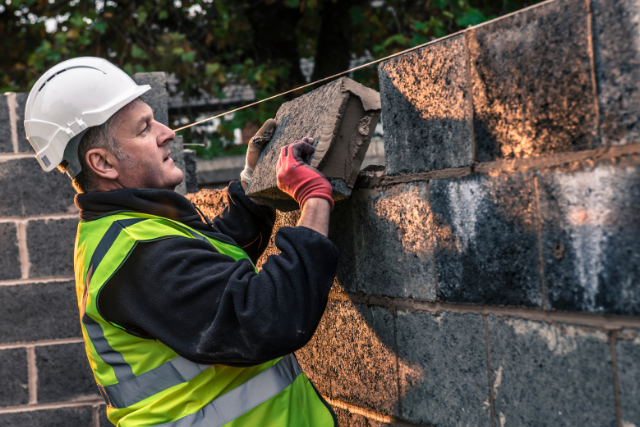
Not every mason comes up through the three-level training curriculum. Someone with years of field experience can instead pursue NCCER's journey-level Mason assessment. Passing the written knowledge assessment alone earns a Knowledge Verified credential.
Passing the corresponding hands-on Performance Verification alone earns a Performance Verified credential. Only candidates who earn both are awarded the full NCCER Certification for the Mason craft.
The current Mason assessment (specification AEN28MASON01, updated November 2024) is:
- A two-hour, closed-book written exam
- 70 total items covering safety, tools and equipment, measurements and specifications, masonry materials, masonry installation, reinforcing masonry, and elevated masonry
- Scored with a minimum passing score of 75
- Paired with an optional hands-on Performance Verification
This path exists specifically for experienced craft professionals to demonstrate what they already know, rather than repeating training they have effectively already learned on the job. It references the 4th edition Masonry curriculum, so candidates preparing for it should study against that edition's content rather than the newer Level 1 and 2 materials.
Do NCCER Masonry Credentials Expire?
NCCER training credentials don't carry a personal renewal or continuing education requirement once earned; they remain on the individual's NCCER Registry record. NCCER's craft expiration policy is a separate mechanism: it retires a previous curriculum edition three years after a new edition's final level is released, which affects what training sponsors can use to certify new trainees going forward. It does not remove a credential someone has already earned.
Building a Masonry Career with NCCER Credentials
A typical progression looks like this:
- Complete Level 1 to establish fundamental tool use, safety, and basic installation skills
- Complete Level 2 to build reinforced masonry, code, and inspection knowledge
- Complete Level 3 to reach advanced technical work and begin developing crew leadership skills
- For workers who skip formal training, pursue the journey-level Mason assessment to validate field experience directly
- For those moving into supervision, pursue NCCER's Construction Foreman Certification, which requires at least two years of journey-level experience in the craft being led.
Each stage is independently verifiable, which is the point. A contractor reviewing a candidate's credentials does not have to take their word for what they know. They can check the Registry.
NCCER's Masonry credential structure separates a mason's development into clear, verifiable stages rather than one broad label. Levels 1 through 3 build technical skill progressively, the journey-level Mason assessment validates experience for workers who didn't come up through formal training, and Level 3's crew leadership content opens a path toward supervisory roles. Whichever route applies, the value is the same: a credential that any contractor can verify without relying on a resume claim.
Useful Resources
Frequently Asked Questions
Do I need NCCER Core before starting Masonry Level 1?

.svg)
Can I skip straight to the journey-level Mason assessment without taking Levels 1 through 3?
Does passing the Mason assessment replace Levels 1, 2, and 3?
Do NCCER Masonry certifications expire?
Does Masonry Level 3 qualify me to be a foreman?
Never Lose Track of Your Masonry Credentials
Keeping Level 1, 2, and 3 certificates, assessment results, and other jobsite credentials organized across employers and training sponsors gets harder every year you’re in the trade. BuilderFax lets masons store verified NCCER credentials in one place and share them instantly when a contractor or job site needs proof.
Download BuilderFax.svg)
.svg)